Making Sense of Herbal Measurements
There are so many facets to studying herbal medicine.
Besides learning about the herbs themselves we also study strange terminology like carminative and expectorant, and even energetic ways of understanding disease and tissue states such as dry/damp, hot/cold.
Then there is the art of making plant medicine, which is a whole other avenue of study.
This article is about navigating your way through understanding the different measurement methods commonly used in herbal medicine making.
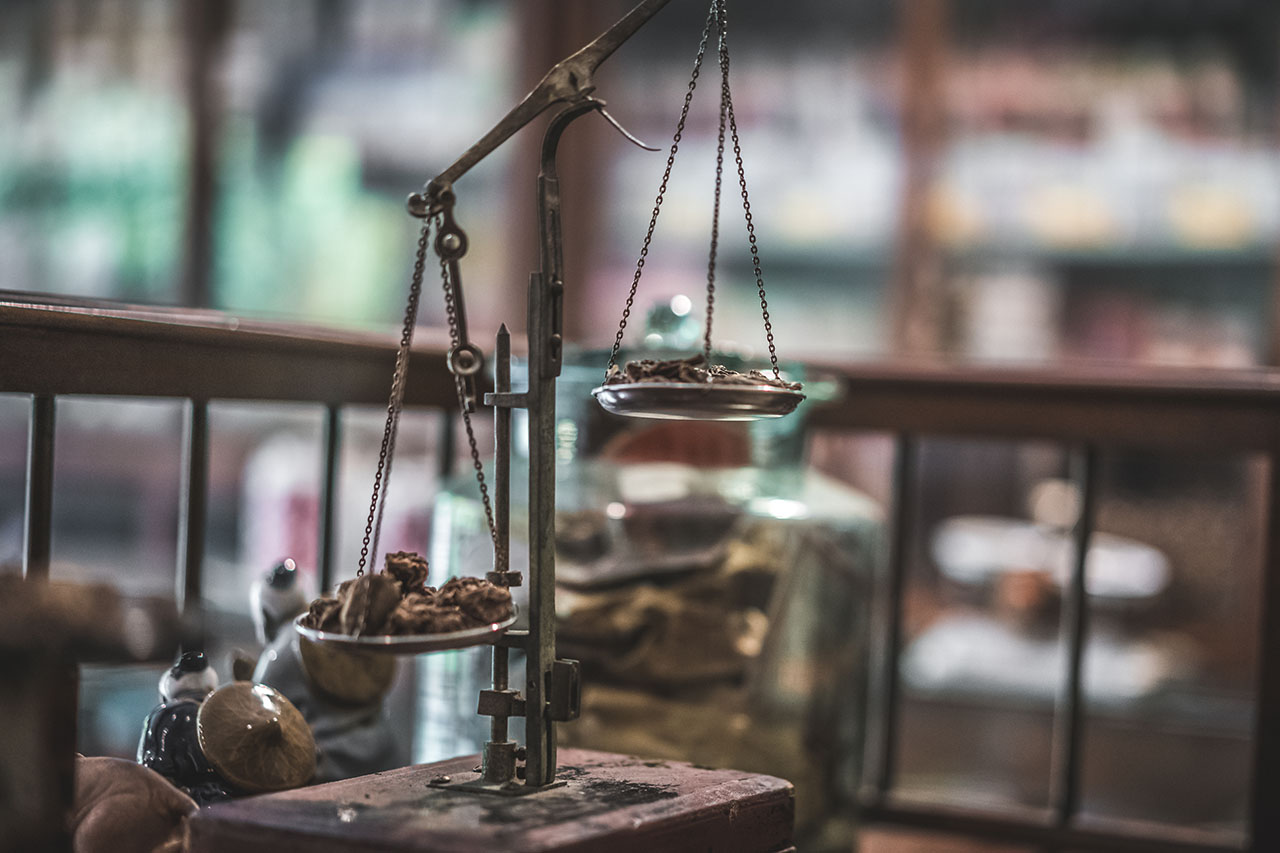
Herbal Medicines are Measured in Different Ways
If you’ve done much cooking or baking, you’re probably familiar with measurements like ½ teaspoon of baking soda or ¾ cup of olive oil. But when it comes to making herbal medicine, you’ll encounter a few different ways of measuring ingredients.
Herbalist practice may call for measuring by weight, volume, ratios, or “parts.” The best approach depends on what you’re making, the type of plant material you’re working with, and how precise or repeatable you want the final preparation to be.
At first, these different methods can feel unfamiliar. But once you understand how they work — and have a few simple measurement devices on hand — they’re actually quite straightforward. Learning these basics will make it much easier to follow herbal recipes, understand how plant extracts are made, and confidently create your own herbal preparations.
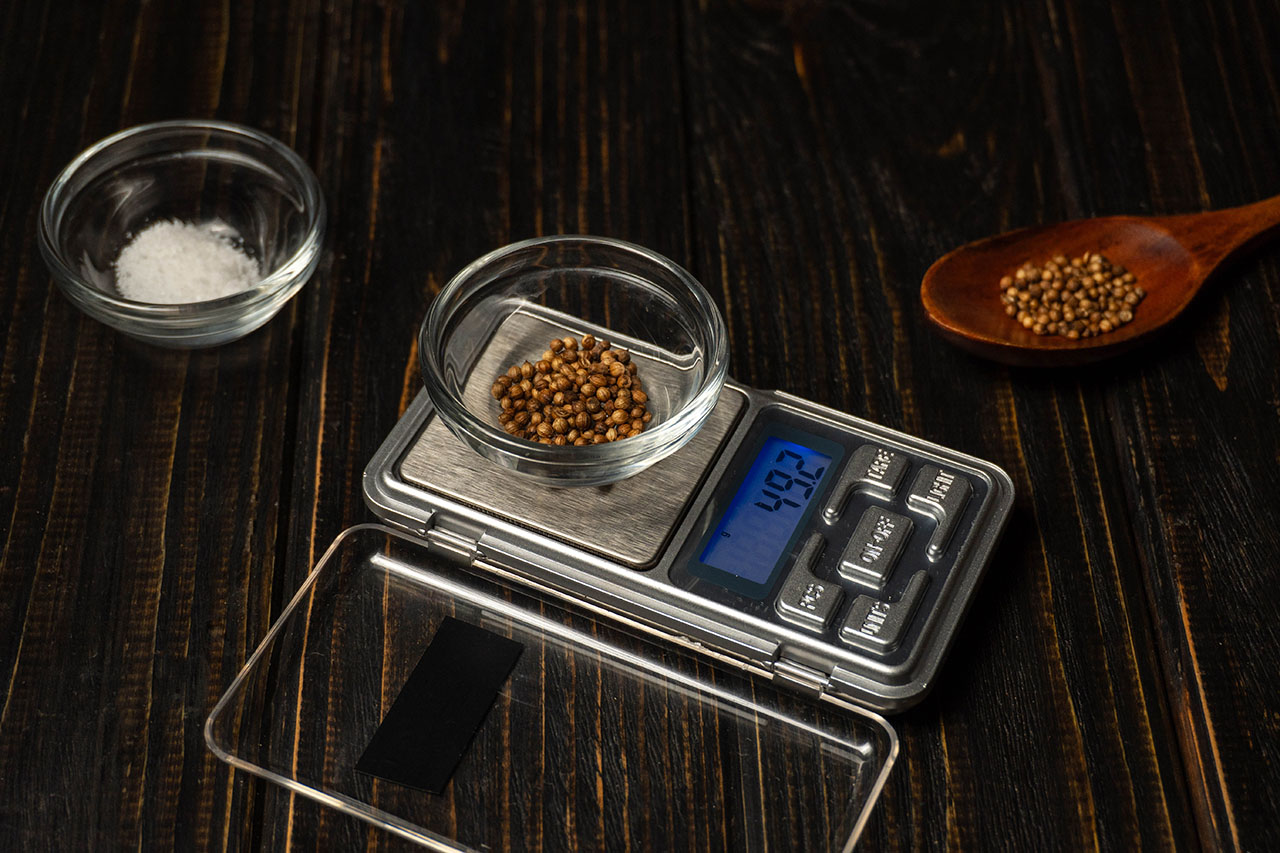
Weight vs. Volume
Most culinary cooking is measured by volume. In the US the Imperial System of measurement is commonly used. These are things like teaspoons, tablespoons, cups, etc.
Weighing by volume when things have a uniform shape is fairly accurate. For example, baking soda is pretty much the same consistency no matter where you buy it. So a teaspoon of baking soda in my kitchen is going to be the same as a teaspoon of baking soda in your kitchen.
But herbs, and other common ingredients in herbal recipes, do not have a uniform shape.
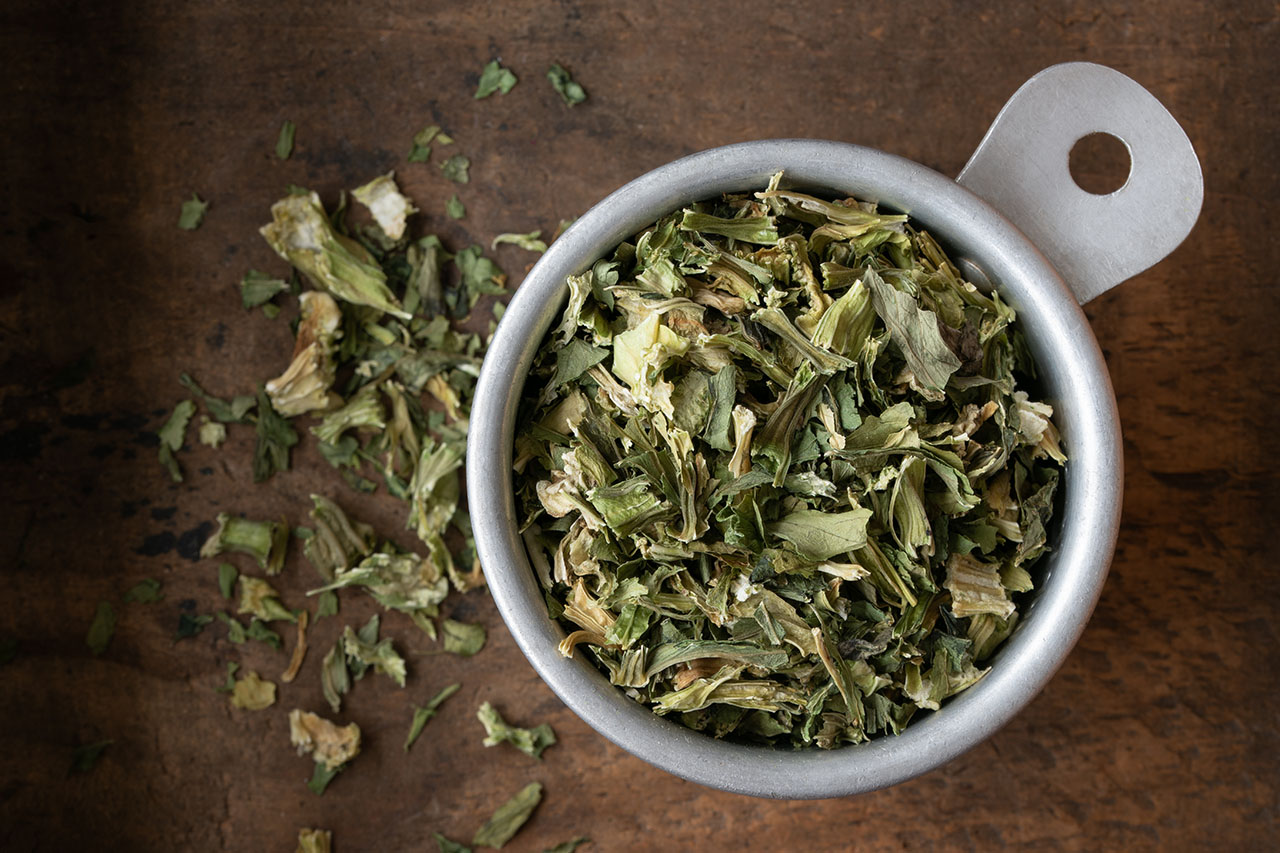
If you and I both harvest and dry dandelion root for herbal tea, they may look very different. Maybe you cut yours up into super tiny fragments while I leave mine in larger chunks. This difference in size means that if we measured those by volume we could come up with two very different amounts.
Measuring oddly shaped things is just not accurate. This is why most things you buy in a box in the store state on the label something like, “Contents are measured by weight not volume.”
I have heard beginning herbalists complain that measuring things by weight is complicated. It may be different than what someone is used to, but it is often more simple than weighing by volume.
In order to accurately measure beeswax by volume, you would first have to melt the beeswax, pour the melted beeswax into a measuring cup, then clean off the melted beeswax from your measuring devices.
That is complicated.
In comparison, measuring beeswax by weight is very simple and much more accurate.
Granted, sometimes when making up your favorite pot of herbal tea you don’t need to be super precise in your measurements. A handful here and a pinch there produces a delicious pot of herbal tea.
When I publish recipes I want the most accurate measurements possible so that people get a reliable result.
Can you imagine how bothersome it would be if I published a recipe that said, “throw a bit of kava in, followed by a bit more cocoa, once it seems done add a good amount of vanilla extract”? This can be done as a folk method of herbal medicine, but would not allow for standardized tinctures or herbal extracts that are replicable at a larger scale.
Generally, the more experienced you are with herbs and certain recipes the less you have to measure things out — especially for home use. I think that measuring out formulas for clients should still be precise to leverage all of the benefits of modern safety as well as traditional insight.
The only thing I routinely measure by volume is plant extract liquids such as oils or aloe vera.
Everything else I weigh using this scale.
Imperial System vs. Metric System
If you grew up in the US then you are probably most familiar with the Imperial Measurement System, which includes measurements like inches, ounces and pounds.
Only three countries in the entire world use the Imperial System of measurement (Myanmar, Liberia and the US). The rest of the world uses the metric system.
Herbalist jim mcdonald likes to proudly stand in favor of the Imperial System, and maintains his positions with remarks such as, “The metric system is the measuring system of the Borg.” If you are ever looking for cheap entertainment, strike up a pro-metric system conversation with jim. It’s pretty funny.
However, I often choose to use the metric system because I find it to be both simple and practical.
Metric measurements, especially grams, make it easy to measure small quantities of dried herb accurately. They also make herbal recipes easier to communicate internationally. For herbal medicine recipes where consistency matters, grams can be much more practical than very small measurements in ounces.
Perhaps jim is right and the metric system lacks poetry. There is something romantic about discussing weight in stones or distance in leagues.
But the metric system is super simple and practical, two things I favor.
What About Measuring in Parts?
Another strange measurement system you’ll see with herbal recipes is measuring things in parts.
Measuring in parts allows the user to determine how big or how little their batch is going to be.
When measuring in parts you simply choose the size you want your part to be.
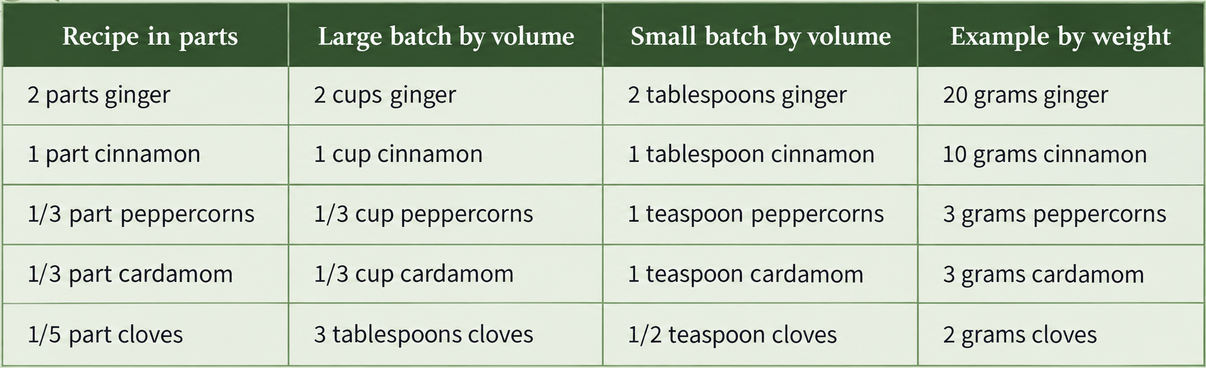
Here’s an example of a chai herbal tea recipe given in parts then converted to recipes by volume and by weight. There is a bit of a difference due to the limitations of volume measurements, but generally in dried herb tea blends like this precise accuracy is not needed.
In the large batch by volume my chosen part is a cup.
In the small batch by volume my chosen part is a tablespoon.
In the weight example my chosen part is 10 grams.
Summary
Ultimately, there’s no single “right” way to measure herbs. Volume, weight, metric measurements, and even the humble handful all have their place. What matters is understanding the strengths and limitations of each method so you can choose what works best for the herbal preparation at hand.
With a little practice, these different systems become second nature - and you’ll be able to move between precision and the intuitive, hands-on nature of herbalism with ease.
Here are some frequently asked questions about herbal measurements…
Do I need to be precise when making herbal medicine at home?
Not always. A simple herbal tea made for your own enjoyment can often be prepared using a handful, pinch, or spoonful. This kind of folk method is part of the hands-on tradition of making plant medicine. However, greater precision is useful when developing repeatable recipes, working with concentrated herbal extracts, or preparing herbal supplements.
How do measurement methods relate to active constituents?
The amount of plant material used in a preparation influences how much of its active constituents are available for extraction. Different herbs also contain different types of compounds, including water-soluble constituents and compounds that are more readily extracted by alcohol or other solvents, such as in the tincturing process. Understanding measurements is therefore an important foundation for making consistent herbal teas, herbal tinctures, herbal supplements, and other plant extracts.
What measurement devices do I need to start making herbal medicine?
You don't need a complicated collection of equipment for making plant medicine. A reliable kitchen scale is one of the most useful measurement devices for weighing dried herbs and other ingredients. Measuring spoons and cups are also handy for liquids and simple preparations. As your herbalist practice develops, you can add equipment based on the types of herbal medicine you make most often.
How do I measure by weight if I don’t have a scale?
You don’t — you’ll need to buy a scale! These are found fairly easily at cooking stores. I bought this one online several years ago and I use it practically every day. It works great.
How do I convert ounces to grams (or vice versa)?
Many digital scales allow you to switch between grams/ounces. My scale does this with two pushes on a button.
There are also numerous online conversion tools. For example, if you go to a google search bar and type in “9 grams to ounces” it immediately converts it for you.

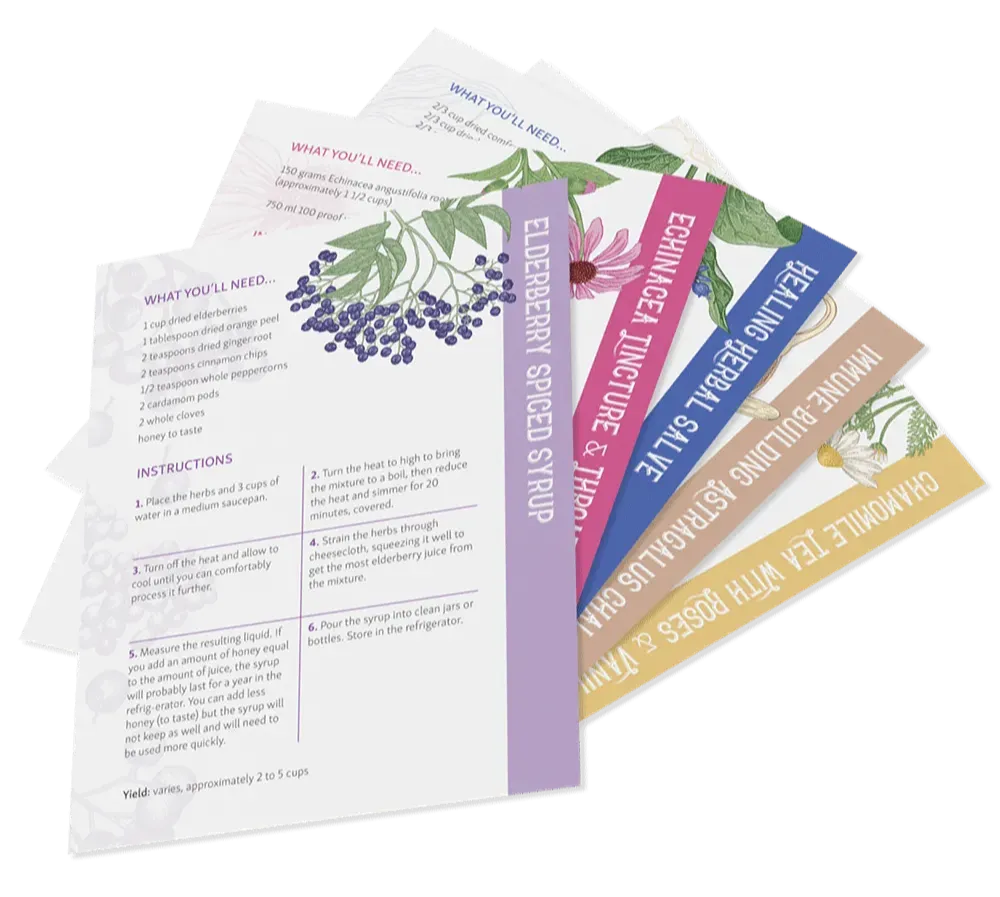
The Herbal Remedy Vault has all of our printable recipe cards...